LOADING

Type to search

PLAZIFLEX vs Other Plastic Trowels: Which One Should You Choose?

Guides Technical

PLAZIFLEX vs Other Plastic Trowels: Which One Should You Choose?

Share

Plastic trowels are widely used across the plastering industry to achieve a smooth, polished finish on walls and ceilings. They’re particularly valued during the finishing stages of skim coating, smoothing thin renders, and working on curved or awkward surfaces.

Rather than being used earlier in the process, plastic trowels are best suited to the closing stages of plastering, where they help refine the surface and achieve a smooth, polished finish. This reduces drag, minimises the risk of dark marks and trowel lines, and helps achieve a more consistent finish with less effort. For many professionals, a plastic trowel isn’t a replacement for steel; it’s an essential finishing tool that improves speed, control, and final appearance.

PLAZIFLEX trowels sit alongside well-known options in the industry, which we’ll explore in this guide.

Why Professionals Use Plastic Trowels

Experienced plasterers choose plastic trowels for very specific reasons, including the following:

  • Earlier Use on Fresh Plaster

Plastic blades glide over wet plaster without pulling material back. This allows professionals to close in sooner, helping to flatten high spots while the plaster is still workable.

  • Reduced Trowel Marks

Plastic doesn’t burnish the surface in the same way steel does, dramatically reducing black marks, drag lines, and surface chatter, especially on lighter finishes.

  • Improved Control on Curves & Details

Flexible plastic blades adapt better to curved walls, ceilings, reveals, and awkward angles where rigid steel trowels can struggle.

  • Cleaner Finishing

Plastic trowels help prevent over-polishing, making them ideal for achieving a consistent finish before final detailing.

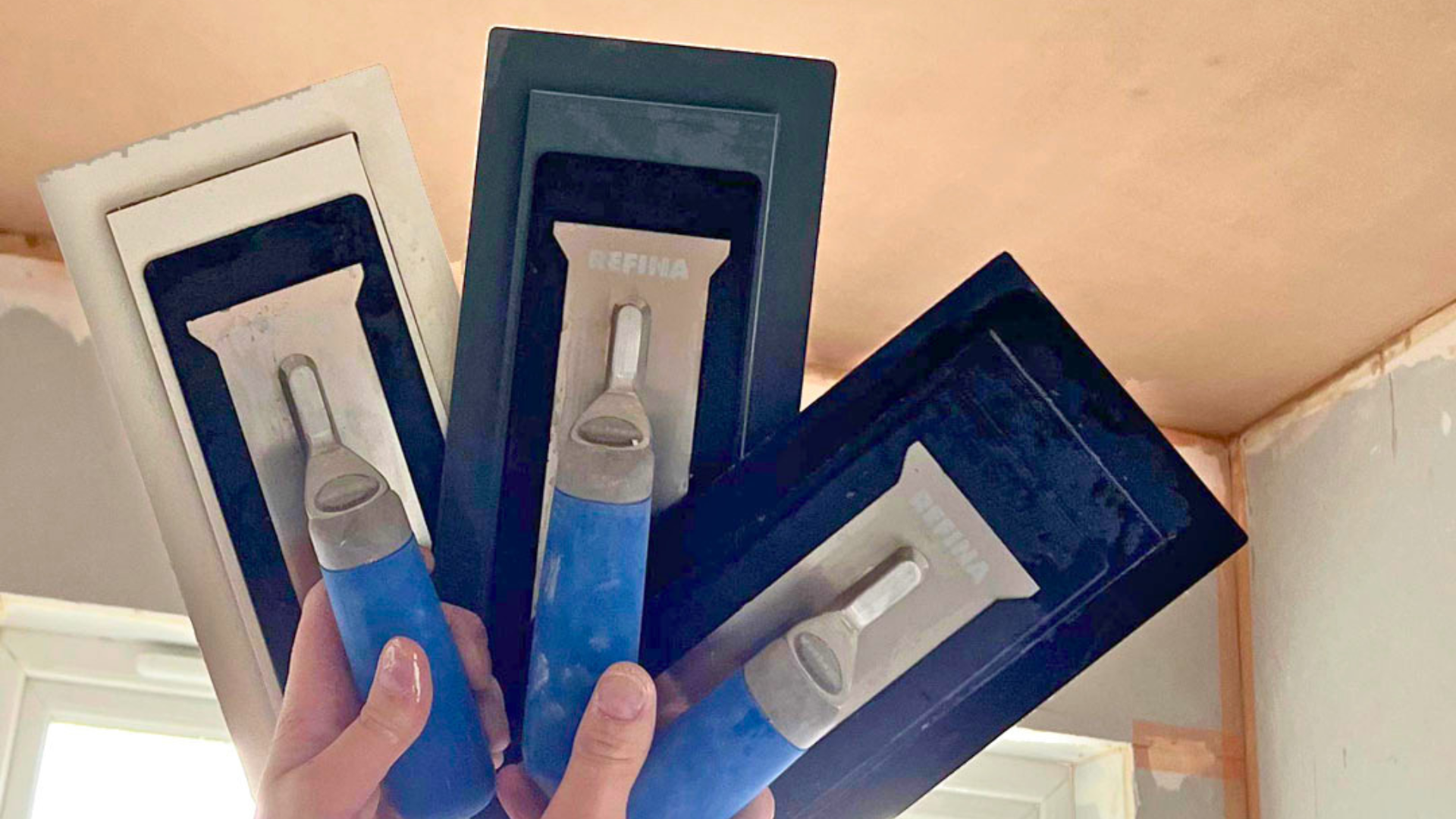
REFINA PLAZIFLEX in use

Typical Applications for Plastic Trowels

Professional plasterers commonly use plastic trowels for:

  • Skim coating plasterboard and existing walls
  • Final finishing passes on multi-coat plaster systems
  • Thin coat renders
  • Curved walls, arches, and ceilings
  • Touch-ups and polishing without surface burn

PLAZIFLEX trowels from REFINA are designed to perform across all of these applications without sacrificing control or longevity.

Who Are PLAZIFLEX Trowels Best Suited For?

PLAZIFLEX trowels are best suited for a range of trade professionals.

Professional Plasterers

Designed for daily site use, PLAZIFLEX trowels offer the durability and consistency professionals expect when finishing multiple rooms or full properties.

Renderers Working With Thin Coats

The controlled flexibility of the blade makes PLAZIFLEX suitable for smoothing fine finishes without tearing or overworking the surface.

Trades Working on Detailed or Curved Surfaces

Where control matters more than pressure, PLAZIFLEX excels particularly on arches, columns, and ceiling work. While budget plastic trowels may suit occasional DIY use, PLAZIFLEX is designed for professionals who rely on consistent results and long-term tool performance.

A Closer Look at PLAZIFLEX Trowels

PLAZIFLEX trowels are engineered with professional plasterers in mind. Every aspect of the design focuses on improving efficiency, reducing fatigue, and delivering a superior finish on every job. From the blade to the handle, each feature is carefully considered to make finishing walls, ceilings, and curved surfaces easier and more precise, day in, day out.

Key features include:

  • High-Quality Flexible Interchangeable Plastic Blade – Provides the ideal balance of flexibility and firmness, allowing the trowel to glide smoothly over fresh plaster without leaving marks or dragging. Maintains its shape over time, unlike cheaper alternatives. The interchangeable blade lets you switch between blades to suit your needs, whether you’re working on a small or large surface.
  • Rounded Edges for Clean Finishing – Factory-finished edges minimise drag lines and edge marks, reducing the need for extended “breaking-in” and helping achieve a flawless surface straight away.
  • Lightweight, Well-Balanced Design – Optimised weight and balance reduce wrist and forearm fatigue during extended use, especially on ceilings or high walls.
  • Ergonomic Handle for All-Day Comfort – Designed for a secure, comfortable grip even when hands are wet or covered in plaster, giving precise control on every stroke.
  • Built for Professional Longevity – Constructed from durable materials that resist cracking, edge wear, and warping, making PLAZIFLEX a reliable tool for daily trade use.

Within the REFINA range, we offer 3 PLAZIFLEX models to suit your requirements.

REFINA 1.0mm PLAZIFLEX® Trowels

Designed for the final stages of plastering, the 1.0mm blade provides full flexibility, allowing users to achieve a perfectly smooth, flat finish on walls and ceilings with ease.

REFINA 1.5mm PLAZIFLEX® Trowels

With slightly increased firmness, the 1.5mm blade gives a controlled, flexible feel, making it suitable for earlier troweling stages while still delivering an excellent finish. Ideal for tradespeople looking to use a plastic trowel throughout the finishing phase.

REFINA 2.0mm PLAZIFLEX® Trowels

The 2.0mm blade offers a firm yet flexible experience, allowing the trowel to be used much earlier in the plastering process. Perfect for flattening, smoothing, and finishing with a single tool. Thanks to the high-quality, non-marking blade, it’s also versatile enough for thin-coat renders, floating, and other finishing applications.

Below, we look at alternatives to the PLAZIFLEX and how they perform.

Competitor A: Flexible Plastic Finishing Trowel (Pro‑Style)

Key Features

  • Lightweight, semi‑flexible plastic blade designed for finishing passes.
  • Removable shank and ergonomic soft‑grip handle for comfort and control.
  • The replaceable blade system lets you swap blades without replacing the entire tool.
  • Handle and shank can be positioned within the blade channel for improved reach.

Limitations Compared to PLAZIFLEX

  • Semi‑flex blade tends to be less responsive and balanced than a dedicated foam‑backed flexible design, which may reduce surface conformity on curved or uneven walls.
  • Lightweight flexibility comes with a more pronounced “drag” feel for some finishing tasks, which can affect smoothness compared with more advanced flexible blades.
  • Does not feature a specialised foam backing that helps distribute pressure evenly across the blade for smoother finishing.
  • The blade system is practical, but the overall tool may be heavier and less optimised for long days on site compared to premium flexible models.

Competitor B: Max Flexible Plastic Blade System

Key Features

  • Slide‑on flexible plastic blades for quick, tool‑free blade changes on site.
  • Robust metal shank adds strength to the trowel assembly.
  • Ergonomic BiKoGRIP handle for improved comfort and grip during use.
  • Available in multiple standard sizes, making it versatile for different jobs.

Limitations Compared to PLAZIFLEX

  • Blade flexibility and finish quality can vary since the system offers simpler plastic blades without dedicated support/backing, potentially resulting in a slightly more inconsistent finish.
  • Does not incorporate a specialised foam‑backed structure to balance rigidity vs. flex, which helps reduce fatigue and drag.
  • The blade system is functional, but overall performance on very fresh plaster or curved surfaces may not be as refined as that of models with enhanced blade engineering.
  • The comfort grip is solid; however, it is the only handle option available, and the system’s balance and weight distribution are not as trade-optimised for prolonged finishing sessions. The PLAZIFLEX offers multiple handle types for improved adaptability and user preference.

Competitor C: Flexi System Plastic Trowel Blade Option

Key Features

  • Plastic blade options include versions with and without foam backing, offering flexibility vs. rigidity.
  • Foam‑backed plastic blades offer enhanced flexibility and help keep plaster pliable longer by preventing water from being drawn to the surface.
  • Dual‑edge design (square and rounded corners) increases application versatility.
  • Can be repaired in‑field by smoothing minor damage with wet‑and‑dry paper, extending blade life.
  • Lightweight construction reduces strain on arms and joints during use.

Limitations Compared to PLAZIFLEX

  • Blade flexibility depends on the foam backing, but it may not offer the same balanced flex and support as the dedicated foam‑backed flexible system across a range of plastering tasks.
  • Quality and finish consistency can vary between blades with no backing vs. foam-backed blades, meaning results may be less uniform than with a product engineered with a structured flex system.
  • While versatile, the need for an additional master trowel handle (sold separately) adds extra components and potential complexity compared to a fully integrated flexible trowel solution.
  • The system’s ergonomic integration and balance are highly dependent on matching blade and handle; a single, purpose‑built tool may deliver more consistent comfort and performance.

Product Comparison

Feature PLAZIFLEX Pro-Style Semi Flex Max Flexible Blade Flexi System Blade
Flexibility Optimised for each stage (1.0 / 1.5 / 2.0 mm) Semi-flex, less adaptive Basic plastic flex Foam/non-foam, inconsistent
Finish Quality Smooth, minimal marks Good, can drag Varies, less controlled Moderate, depends on the blade
Ergonomics & Balance Trade-tested comfort Decent Functional Varies by handle
Durability High, resists wear & cracking Good Basic plastic Blade dependent
Best For Pros needing a consistent, high-quality finish Trades wanting replaceable blades Basic flexible blade use Blade dependent

Why The PLAZIFLEX Stands Out

Engineered for professional finishing

Multiple blade thicknesses are designed for specific plastering stages, helping deliver consistently smoother walls and ceilings with greater control across applications.

Precision material selection

The specific plastic formulation used in the blades improves even wear, durability, adaptability and predictability in the hand. It’s engineered to flex consistently under pressure rather than deform unpredictably, giving professionals confidence in every pass.

Superior flexibility control

Balanced flex reduces drag, minimises surface marking, and provides more predictable results, particularly on curved surfaces, detailed areas, and tight finishing work. The blade’s controlled response makes it easier to achieve tight, refined finishes without overworking the material.

Integrated midget trowel functionality

The midget trowel that slots into the system is a fully functional, standalone tool. It can be used independently for detailed work such as windows, reveals, and tight areas, effectively serving as a true trowelable midget trowel.

Better ergonomics & fatigue reduction

Optimised balance and grip design improve handling comfort during extended finishing sessions. The PLAZIFLEX is built to feel stable in the hand, reducing strain while maintaining precision and control.

Built for durability on-site

Engineered to withstand tough jobsite conditions, the blade and components resist premature edge wear and cracking better than generic plastic trowels. The result is longer tool life and more consistent performance over time.

Leave a Comment