The Ultimate Guide to Rendering and External Finishing Systems

Share
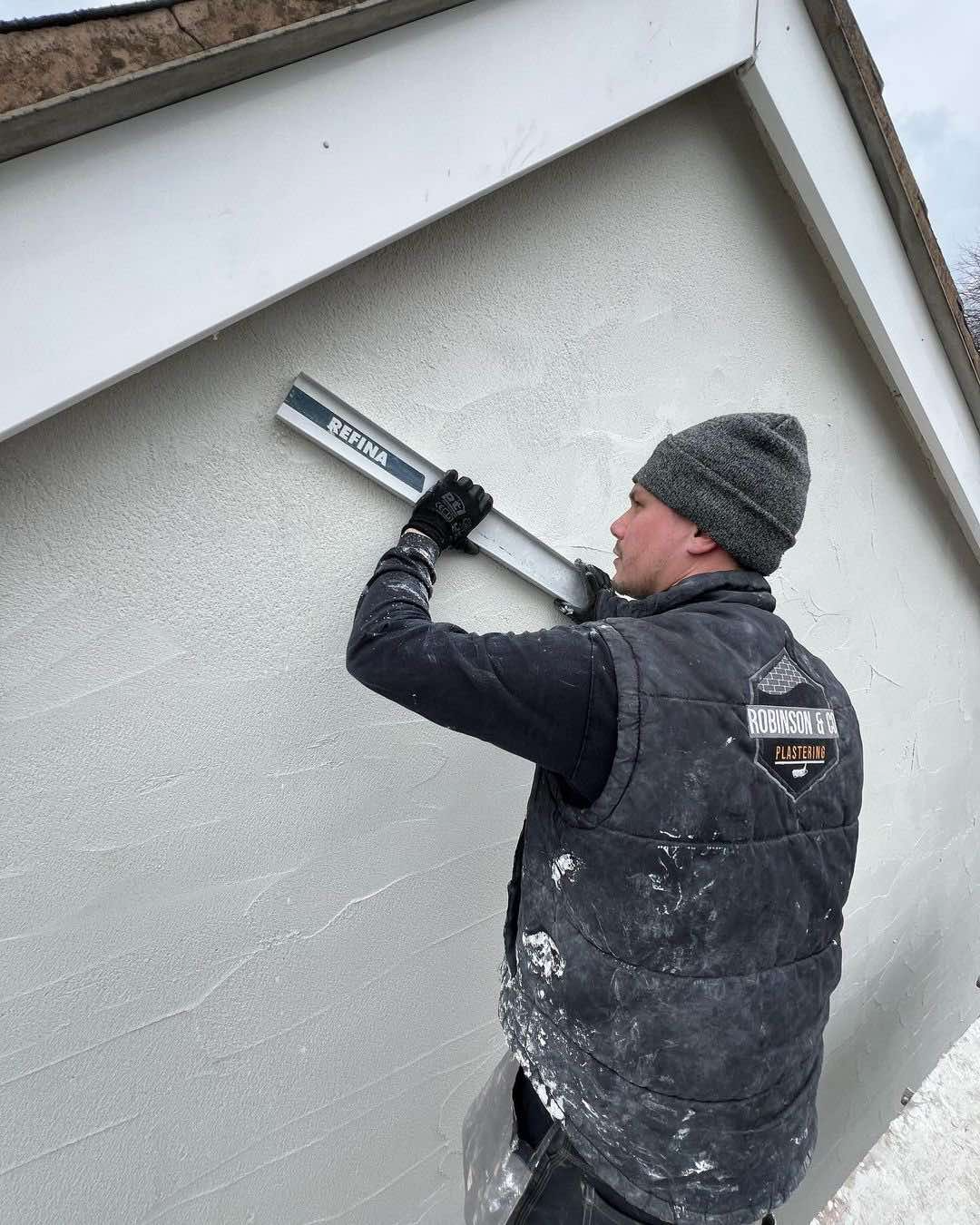
Rendering is one of the most widely used methods of protecting and finishing the external walls of buildings. From traditional sand and cement render to modern monocouche, silicone, acrylic and mineral systems, rendering can provide both practical protection and an attractive decorative finish.
A properly specified render system can help protect external walls from weather exposure while improving a building’s appearance. However, achieving a professional and durable finish depends on more than simply applying render to a wall.
Choosing the correct system, preparing the substrate properly, and using the right application tools all play important roles in the performance, appearance, and longevity of the finished surface.
Whether you’re rendering a new-build property, refurbishing an existing façade or applying a modern thin-coat system, understanding the different materials, application stages and tools will help you achieve consistently high-quality results.
In this guide, we’ll explain the main types of rendering systems, the external application process, essential rendering tools, common rendering problems and best practices for maintaining a durable professional finish.
What is Rendering?
Rendering is the process of applying one or more coats of a protective and decorative material to the external surface of a building.
Unlike internal plastering, external rendering systems need to withstand changing weather conditions, moisture, temperature fluctuations and exposure to sunlight. The selected render therefore, needs to be suitable for both the substrate and the conditions in which the building is located.
Rendering is commonly used on:
- Brick and blockwork
- Concrete walls
- External insulation systems
- New-build housing
- Commercial buildings
- Extensions and refurbishment projects
Depending on the system selected, render can provide a smooth, textured or scraped finish in a wide range of colours and appearances.
Benefits of External Rendering
External rendering provides several practical and aesthetic benefits when the correct system is selected and applied correctly.
Weather Protection
One of the main purposes of external rendering is to protect the underlying wall from exposure to rain, wind and changing weather conditions. A correctly specified system provides a protective outer layer while helping manage moisture at the external surface.
Improved Appearance
Rendering can transform the appearance of an existing building while providing a consistent finish across new construction.
Modern coloured and textured render systems are available in a wide range of finishes, allowing different decorative effects to be achieved without necessarily requiring additional painting.
Improved Surface Consistency
Rendering can help create a more uniform external surface by covering variations in the underlying masonry.
It can also provide a suitable base for decorative finishes, depending on the system being installed.
Building Performance
Some external render systems are part of wider insulation systems designed to improve a building’s thermal performance.
The selected system should always be appropriate for the building’s construction and installed in accordance with the manufacturer’s requirements.
Types of Render Systems
Several types of render are available, each offering distinct characteristics, application methods, and finishes.
The correct choice will depend on factors such as the substrate, exposure conditions, required appearance and project specification.
Traditional Sand and Cement Render
Sand and cement render is one of the most established external rendering systems.
It is generally made with cement, sand, and water, and can be applied in multiple coats before being finished with a suitable texture or decorative treatment.
Traditional render remains popular because of its versatility and familiarity among professional tradespeople.
Advantages :
- Widely available materials
- Suitable for many masonry backgrounds
- Can be applied in different textures
- Suitable for a range of building types
The render needs to be correctly matched to the background, with appropriate preparation and application, helping to reduce the risk of cracking or debonding.
Monocouche Render
Monocouche render is a factory-produced, through-coloured render system designed to provide both protection and a decorative finish.
Unlike traditional sand and cement render, monocouche systems are commonly supplied as a dry powder that is mixed with water before application. Once applied and finished, the material provides a coloured surface without necessarily requiring a separate coat of paint.
Monocouche can be scraped, floated or textured depending on the specific product.
Advantages :
- Through-coloured finish
- Wide range of colours
- Textured decorative appearance
- Suitable for many modern external wall applications
- Can reduce the need for subsequent painting
The exact application and finishing methods vary by manufacturer, so the relevant product specification should always be followed.
For tips and tricks focused on monocouche render, explore our keying back monocouche render: techniques and tools guide.
Silicone Render
Silicone render is a thin-coat system that uses silicone-based technology to provide a decorative external finish. These systems are commonly selected where weather resistance, flexibility and a decorative finish are important considerations. Silicone renders are available in a broad range of colours and textures.
Silicone render is often applied over a compatible basecoat and reinforcement layer rather than directly onto masonry. To delve even deeper into the different types of renders, please see Monocouche vs Silicone Render: Choosing the Right System for Your Project.
Acrylic Render
Acrylic render is another type of polymer-based decorative render.
It is commonly used as a thin finishing coat and is available in various colours and textures. Acrylic-based systems can offer flexibility and are often selected where a decorative finish needs to accommodate minor movement within the system.
As with other thin-coat systems, the substrate and basecoat must be properly prepared before application.
Mineral Render
Mineral render is generally cement-based and incorporates mineral aggregates and other additives to provide a decorative external finish.
It is often used as part of external insulation and finishing systems where vapour permeability is an important consideration.
Mineral renders are typically supplied as dry powder products that are mixed with water before application.
External Rendering Application Process
Although the exact application process varies between render systems, professional rendering generally follows several key stages.
Substrate Assessment
Before any render is applied, the substrate should be inspected carefully. The background needs to be strong and stable enough to support the chosen system. Surface condition, suction, texture and compatibility with the render should all be considered.
Existing surfaces should be checked for:
- Loose or damaged material
- Dust and dirt
- Existing coatings
- Cracks or movement
- Damp or water ingress
- Changes between different substrate materials
Identifying potential problems before the application can help prevent more significant defects later.
Preparation
Once the substrate has been assessed, it should be prepared in accordance with the requirements of the selected system.
Loose material, dust, dirt and other contaminants should be removed. Depending on the substrate, additional preparation such as priming, dampening, mechanical keying or applying a suitable bonding coat may be required.
Where different substrate materials meet, reinforcement or movement detailing may also be required to help reduce the risk of cracking.
Basecoat Application
Many modern render systems use a basecoat to create a suitable surface for the finishing layer.
The basecoat is applied evenly across the prepared substrate and may incorporate reinforcing mesh where required by the system specification.
The surface can then be levelled using an appropriate rule or straight edge.
Application thicknesses and drying times vary between products, so the manufacturer’s instructions should always be followed.
Finishing Coat Application
Once the basecoat is ready, the finishing material can be applied.
The application method depends on the type of render being used. Traditional render may be ruled and floated, while monocouche can be scraped back to create a consistent texture.
Thin-coat renders are generally applied over a prepared base coat and finished with tools appropriate to the specific product.
Consistent application thickness and working technique are particularly important with coloured renders, where variations can become more noticeable once the surface has dried.
Essential Rendering Tools
Using the correct tools can make a significant difference to application speed, surface consistency and overall finish quality.
Render Trowels
Render trowels are used to apply, spread and flatten render across the substrate.
A good rendering trowel should provide sufficient strength and control for handling heavier materials while remaining comfortable during extended use.
Choosing the correct size and shape can also improve efficiency when working across large surfaces or detailed areas.
REFINA offers a range of professional trowels designed for plastering and rendering applications, providing tradespeople with options for different materials and finishing techniques.
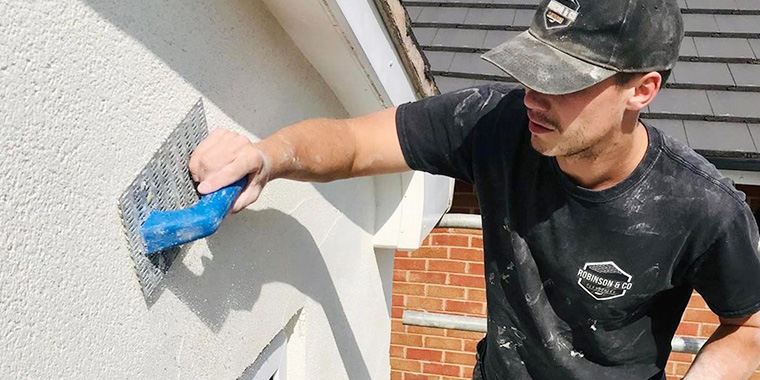
Scarifiers & Keying Tools
Scarifiers and keying tools are used to create a mechanical key in base coats, helping provide a suitable surface for subsequent coats of render to bond to. By creating a consistent textured surface, they can help improve adhesion between layers and reduce the risk of problems caused by poor intercoat bonding. The required key will depend on the render system and application requirements, so the manufacturer’s recommendations should always be followed.
Rules and Straight Edges
Rules and straight edges are essential for achieving flat and consistent surfaces.
After the render has been applied, the material can be ruled across the wall to remove high spots and identify low areas that require additional material.
REFINA supplies professional straight edges and rendering tools designed to help tradespeople achieve accurate, consistent surfaces.
Spray Application Equipment
Spray application can be used with certain render systems to cover large areas efficiently.
Spraying can improve application speed and provide consistent material distribution across large elevations, where the render system is designed for machine application.
The equipment must be correctly selected and set up for the material being applied. Always follow the manufacturer’s recommendations regarding machine type, nozzle size and material consistency.

Common Rendering Problems
Even when the correct render system is selected, problems can occur if the substrate, materials, application conditions or finishing techniques are not properly controlled.
Cracking
Cracking is one of the most common problems associated with external render.
It can be associated with building or substrate movement, shrinkage, inadequate reinforcement, unsuitable materials or poor application.
To reduce the risk of cracking:
- Select a system suitable for the substrate
- Prepare the background correctly
- Use reinforcement where specified
- Follow the manufacturer’s mixing instructions
- Allow adequate curing time
- Provide movement joints where required
Delamination & Loss of Adhesion
Debonding occurs when the render loses adhesion to the substrate and begins to detach.
It can be caused by poor substrate preparation, contamination, incorrect background suction, incompatible materials or inadequate application.
Correct preparation is therefore essential. The substrate should be clean, stable and suitable for the specified render system before application begins.
Efflorescence
Efflorescence appears as a white or pale crystalline deposit on the surface of masonry or render.
It occurs when soluble salts are carried towards the surface by moisture and are left behind as the water evaporates.
Identifying sources of water ingress and allowing the system to dry correctly can help reduce the risk of recurring efflorescence.
Discolouration
Discolouration can affect the appearance of coloured render and may occur for several reasons.
Inconsistent mixing, differences in application thickness, variations in drying conditions, contamination and water exposure can all contribute to changes in appearance.
Maintaining a consistent application technique and following the manufacturer’s recommendations can help achieve a more uniform finish.
Maintenance and Longevity
A well-installed render system can provide long-lasting protection and an attractive external finish, but regular inspection and maintenance are still important.
External walls should be periodically checked for:
- Cracks or movement
- Loose or hollow areas
- Discolouration
- Damp or water ingress
- Damaged render around openings
- Deterioration around joints and interfaces
Minor defects should be investigated before they develop into larger problems.
Cracks, for example, can provide a route for water to reach the underlying wall if they are left untreated. When repairs are required, replacement materials should be compatible with the existing render system.
Following the original manufacturer’s recommendations for cleaning, repairs, and maintenance can also help preserve the system’s appearance and performance.
Best Practice Guidance
Achieving a high-quality external render finish starts with good preparation and continues throughout every stage of the application.
Before rendering begins, ensure the substrate is suitable for the selected system and that any existing defects, contamination or unstable material have been addressed.
Use the correct basecoat, reinforcement, and finishing materials for the system, rather than combining products without confirming compatibility.
During application, maintain consistent coverage and thickness and use suitable trowels, rules, straight edges and floats to control the surface.
Avoid applying render in unsuitable weather conditions and protect freshly applied material where required.
Most importantly, always follow the render manufacturer’s instructions. Different systems have different requirements for preparation, mixing, thickness, reinforcement, drying, curing and finishing.
The tools used throughout the process should also be kept clean and in good condition. Dried render on a trowel, scraper or float can affect the working surface and introduce imperfections into the finish.
Final Thoughts
External rendering provides a versatile way to protect and improve the appearance of buildings, with systems available to suit a wide range of substrates, performance requirements and decorative finishes.
From traditional sand and cement render to monocouche, silicone, acrylic and mineral systems, each material has its own characteristics and application requirements.
Achieving a professional result ultimately depends on more than selecting the right render. Careful substrate assessment, thorough preparation, correct application techniques and suitable rendering tools all contribute to the quality and longevity of the finished surface.
Using professional-grade tools such as rendering trowels, scarifiers, straight edges and specialist scrapers can help improve consistency and efficiency throughout the application process.
REFINA offers a range of professional tools for plastering, rendering and external finishing, helping tradespeople achieve greater accuracy and control throughout different stages of the application process.
By understanding the different rendering systems and following the correct application and maintenance practices, plasterers, renderers, and other tradespeople can achieve durable, consistent external finishes across a wide range of projects.
For further guidance on selecting the right tools and techniques, explore our related guides:
- What Are The Best Tools for Rendering?
- Why Straight Edges Are Important Tools in Rendering
- Keying Back Monocouche Render: Techniques & Tools
- The Ultimate Guide to Plastering Tools for Different Jobs
- The Complete Guide to Plastering Trowels: Skimming Walls, Finishing Coats & Choosing Flexible vs Rigid Blades
- Monocouche vs Silicone Render: Choosing the Right System for Your Project