LOADING

Type to search

The Complete Guide to Plastering Trowels: Skimming Walls, Finishing Coats & Choosing Flexible vs Rigid Blades

Basics Guides

The Complete Guide to Plastering Trowels: Skimming Walls, Finishing Coats & Choosing Flexible vs Rigid Blades

Share

Plastering relies on precision, control, and the ability to achieve a smooth and consistent surface finish. The right trowel is central to this. Whether you’re laying multi-finish plaster, skimming walls, or applying a final coat, your choice of trowel dictates the quality of the finish and how efficiently you work. With REFINA’s specialist ranges, such as FINATEX premium trowels and the renowned SUPERFLEX range, you have access to trowels engineered specifically for different stages of the plastering process.

This guide brings together three fundamental topics:

  • Selecting the appropriate trowel for skimming walls
  • Understanding the differences between skimming and finishing trowels
  • Determining the best choice between flexible and rigid blades.

By understanding how each tool behaves on the surface, you’ll be able to select the right trowel for the job and deliver a clean, professional finish with less effort.

Choosing the Right Trowel for Skimming Walls

Skimming is one of the most demanding stages of plastering. You’re applying thin, controlled layers that must be consistent from edge to edge, with minimal drag and a smooth glide. This is where blade design, flexibility and size matter.

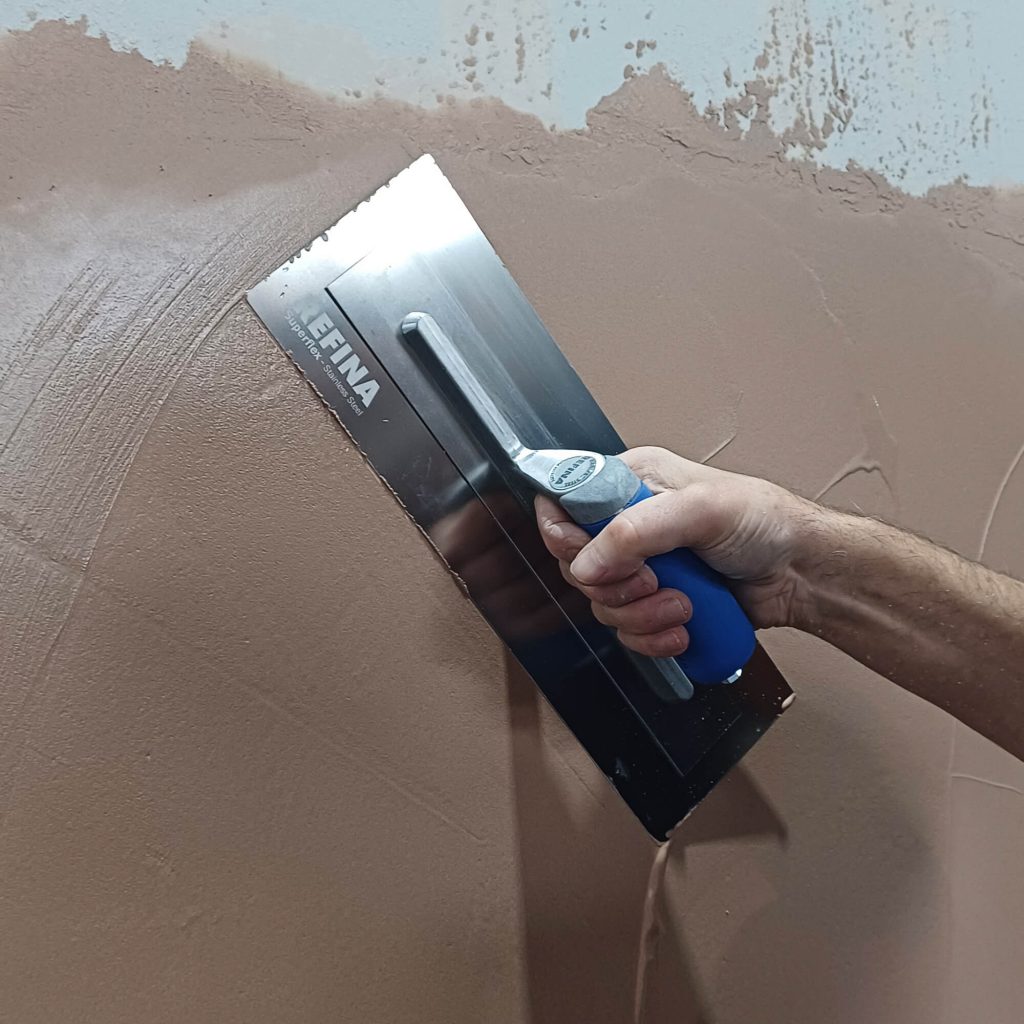
For most skimming applications, plasterers seek a lightweight, smooth-running trowel with a refined blade flex. The REFINA SUPERFLEX trowel family is specifically designed for this purpose. With ultra-thin stainless steel blades, these trowels glide over multi-finish plaster and board finishes with minimal resistance. Their flexibility helps the plaster close easily, allowing the user to build up a perfectly smooth skim coat without over-marking the surface.

However, skimming is not always a “one-trowel-fits-all” scenario. Some plasterers prefer a slightly firmer blade for the initial lay-on, switching to a more flexible tool for later stages. REFINA’s FINATEX-1 premium trowel fits this role well. With its 0.65mm stainless steel blade and pre-worn edges, it provides the support needed when loading material onto the wall while still maintaining a refined level of flexibility for smoothing.

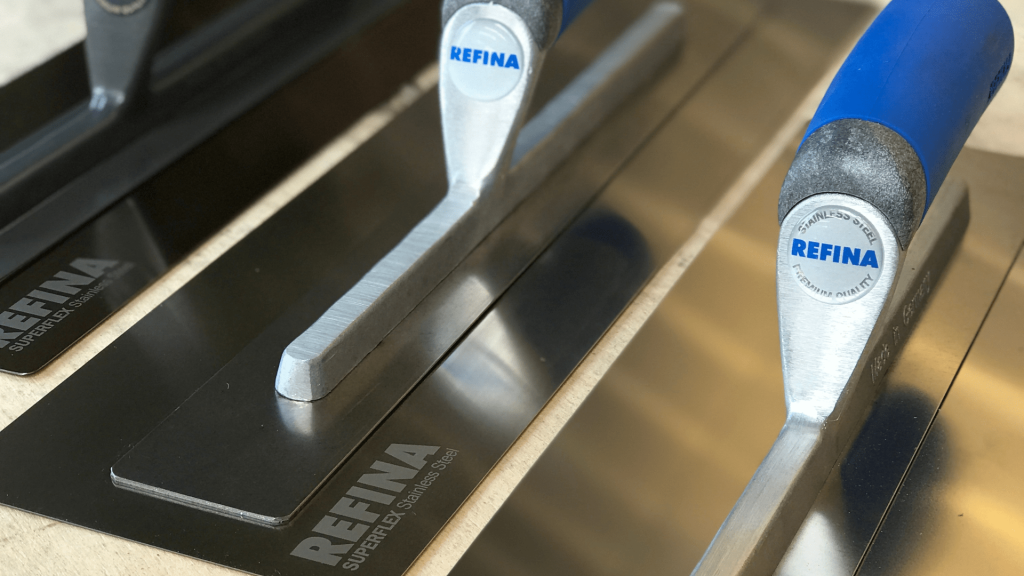
Here are the differences between the SUPERFLEX & FINATEX ranges:

SUPERFLEX-1 – The Most Flexible

  • Features our most flexible 125mm wide 0.4mm gauge blade
  • The SUPERFLEX-1 is best for achieving smooth finishes on walls and ceilings, offering the most flexibility

SUPERFLEX-2 – Slightly Stiffer

  • Features a slightly stiffer 120mm wide 0.4mm blade
  • The SUPERFLEX-2 strikes a good balance between flexibility and stiffness, offering more control along the blade’s length

SUPERFLEX-3 – Most Rigid

  • Features a more rigid 125mm wide 0.5mm blade
  • The SUPERFLEX-3 is considered an ‘all-rounder’, allowing you to apply plaster and finish

FINATEX-1

  • A traditional, stiffer laying on trowel with a 0.65mm stainless steel blade
  • Great for general plastering applications

FINATEX-2

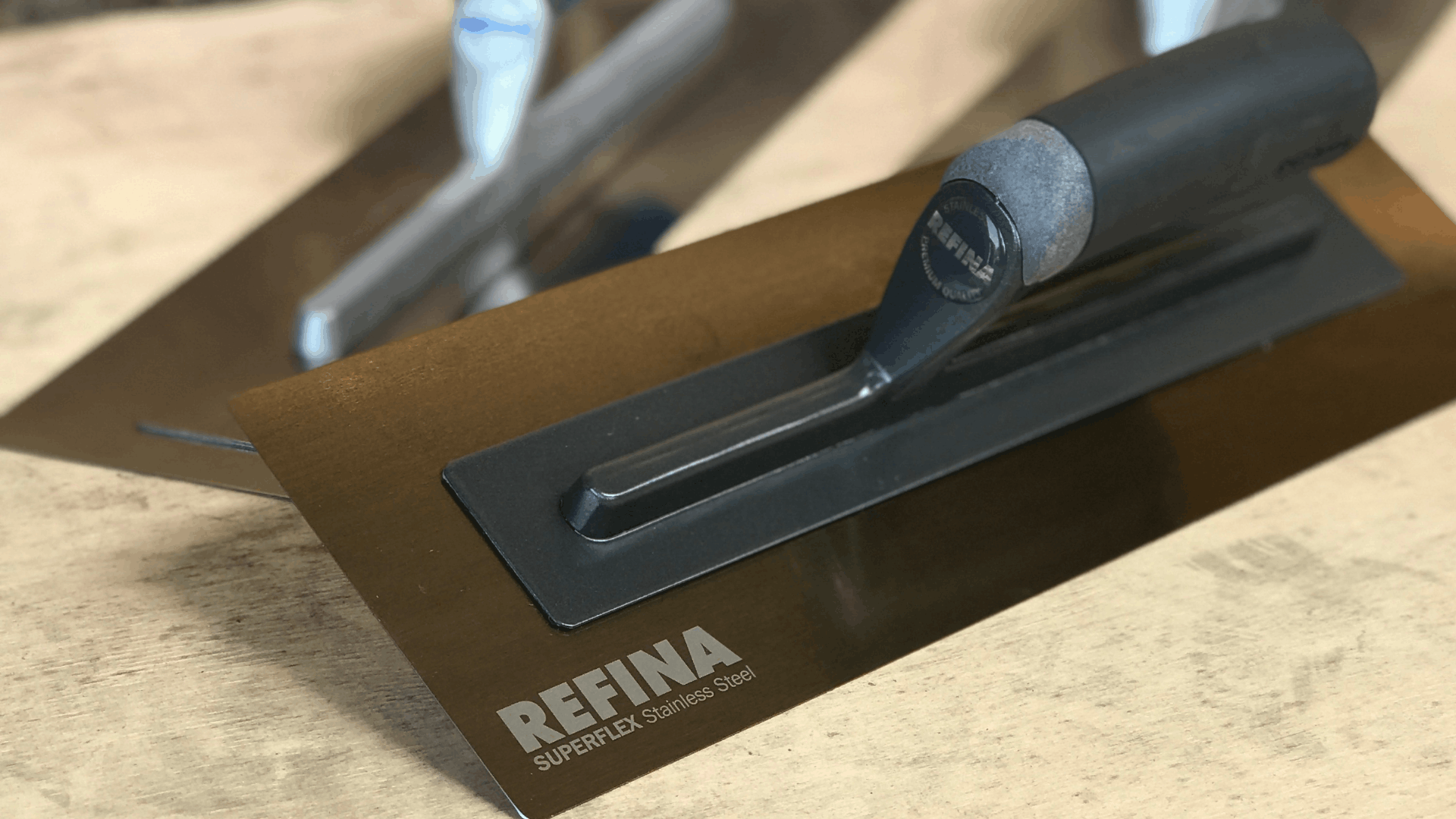
  • Finished in rose gold, and is a lighter, more flexible finishing trowel with a 0.5mm blade
  • Ideal for fine finish plasterings, drywall compounds and spray/airless applications

What About Multi-Finish Plaster?

Multi-finish plaster is versatile but unforgiving if the wrong trowel is used. It sets quickly, demands a consistent application and benefits from a blade that can float lightly over the surface. This is another reason why the SUPERFLEX range is widely trusted, its ability to adapt to the changing texture of multi-finish plaster makes it ideal for the progressive tightening stages.

If you prefer more rigidity early on, a hybrid approach, FINATEX-1 for the first coat followed by SUPERFLEX for finishing passes, offers exceptional control.

Skimming Trowels vs Finishing Trowels: Understanding the Difference

Plasterers often use the terms “skimming trowel” and “finishing trowel” interchangeably, but each serves a distinct purpose. Understanding this difference improves speed, accuracy and surface quality.

What Is a Skimming Trowel?

A skimming trowel is designed for applying thin coats over walls and ceilings. Key characteristics include:

  • Moderate flexibility for smooth, controlled application
  • Lightweight construction for extended working time
  • Slightly larger sizes (14–18”) for covering wider areas
  • Balanced feel for reduced fatigue

REFINA’s SUPERFLEX and certain FINATEX models excel at these early skim stages because their blades minimise drag while still providing stability.

What Is a Finishing Trowel?

A finishing trowel is used in the final stages of plastering, where precision is most crucial. Typical features include:

  • Increased flexibility for perfect closing-in
  • Rounded corners to reduce edge lines
  • Ultra-smooth blades to refine the surface
  • Narrower or medium–sized blades for more control

Here, the SUPERFLEX-2 and SUPERFLEX-3 models become especially valuable. Their thinner gauges give increased “give” across the blade, helping plasterers achieve that polished, seamless surface without tearing the material.

So, What’s the Real Difference?

In short:

  • Skimming trowels: Best for laying on and flattening
  • Finishing trowels: Best for final passes and refining the coat

However, due to modern blade technology, especially the SUPERFLEX 3’s engineered rigidity along the spine with a flexible edge, many REFINA trowels can work across both stages, depending on the plasterer’s technique.

Flexible vs Rigid Trowels: When to Use Each

Another major factor is blade rigidity. Flexibility affects how the edge contacts the plaster, how pressure is distributed, and ultimately how smooth your finish will be.

When to Use a Rigid Trowel

Rigid trowels are essential when structure and pressure are required. These are best for:

  • Laying on base coats
  • Flattening thicker material
  • Working with sand/cement mixes
  • Levelling large flat areas
  • Early stages of multi-finish application

REFINA’s FINATEX-1 embodies this rigidity while still offering enough flex for clean smoothing. Its forged, pre-worn stainless steel blade provides support and control, making it ideal for the first pass on fresh plaster.

When to Use a Flexible Trowel

Flexible trowels shine when finesse is required. A thin, pliable blade allows edges to “hug” the surface without gouging or dragging. Use flexible trowels for:

  • Tightening skim coats
  • Finishing multi-finish plaster
  • Achieving a polished final appearance
  • Working on delicate or high-visibility areas
  • Reducing surface marks and blade lines

This is where the SUPERFLEX series becomes indispensable. From initial smoothing to final close-in, the SUPERFLEX offers a refined, feather-light touch that helps plasterers achieve a professional, mirror-smooth finish.

Hybrid Flex Trowels

Some plasterers prefer a mid-flex blade, stiffer in the centre but flexible at the edges. The SUPERFLEX-3 is engineered exactly this way, offering:

  • Durability
  • Controlled pressure
  • Improved lifespan
  • Consistency across the full plastering process

It bridges the gap between rigid and flexible trowels, making it an ideal all-rounder.

Choosing the Right Size, Gauge & Blade Material

Beyond flexibility, several other factors shape trowel performance:

Blade Size

  • Smaller (11–14”): More control, better for tight areas
  • Larger (16–18”): Better for speed and wide walls

Blade Gauge

Thickness affects flex:

  • 0.4mm/0.5mm = high flexibility (SUPERFLEX)
  • 0.65mm = mid-rigid (FINATEX)

Material Quality

REIFNA trowels use high-grade stainless steel to prevent rust and maintain a smooth glide over time.

Which Trowel Should You Use? A Quick Summary

For quick reference:

  • Skimming walls: SUPERFLEX or FINATEX (depending on your preference for flex)
  • First lay-on: FINATEX-1 (rigid support)
  • Finishing coats: SUPERFLEX1, 2 or 3 (more flex, cleaner finish)
  • Multi-finish plaster: SUPERFLEX (light, smooth and adaptive)
  • General-purpose versatility: SUPERFLEX-3 (hybrid rigidity/flex)

REFINA designs its ranges to allow plasterers to mix and match tools according to their personal technique, job type, and finish expectations.

Why Choosing the Right Trowel Matters

A well-matched trowel reduces fatigue, increases working speed and improves the consistency of the final surface. The difference between a clean, level skim coat and a finish that requires reworking often comes down to blade design, weight, flexibility and edge quality.

REFINA’s specialist trowel ranges are engineered to provide plasterers with the right combination of rigidity, flexibility, and blade smoothness for each stage of the job. Selecting tools that match your technique and application ensures a more efficient workflow and a noticeably higher-quality finish.

Leave a Comment