LOADING

Type to search

Should You Break In A New Plastering Trowel?

Basics Tips & Tricks

Should You Break In A New Plastering Trowel?

Share

When you invest in a new plastering trowel, especially a professional-grade tool from a trusted name like REFINA, it’s natural to want peak performance from the first sweep. Yet, many seasoned plasterers swear by a little-known ritual: breaking in the trowel. This practice is the subject of much discussion in the trade, with opinions divided on whether it’s necessary, how best to do it, and what difference it actually makes.

In this content piece, we explore what it means to break in a new plastering trowel, why so many professionals take the time to do it, and how to properly prepare your tool for smooth, effortless finishes.

What Does It Mean to “Break In” a Trowel?

Breaking in a trowel is the process of slightly wearing down and smoothing the edges and surface of a new plastering trowel before using it on critical finishing work. A brand-new trowel straight out of the box typically has sharp edges, flat corners, and a clean surface that hasn’t yet been worn into a user’s natural plastering technique.

The goal of breaking it in is to make the trowel easier to handle, reduce the risk of edge lines or ‘tramlines’ in fresh plaster, and create a tool that glides more naturally over the surface.

Why Do Plasterers Break In Their Trowels?

There are a few key reasons why many plasterers break their trowels:

1. Avoiding Edge Marks (Tramlines)

New trowels often have very crisp, sharp corners and edges. When used straight away, especially during the final stages of a skim coat, these sharp edges can easily catch or dig into the plaster, leaving fine lines or marks. Breaking in the trowel rounds off the corners ever so slightly, reducing this risk.

2. Better Glide and Control

A broken-in trowel usually feels more ‘worn in’ and easier to manoeuvre across plaster or render. The light sanding or polishing that’s part of the breaking-in process reduces surface friction, which can make a huge difference in finish quality, particularly during the final trowel up.

3. Custom Fit to the Plasterer’s Technique

As you use a trowel more and more, it naturally adjusts to the angle, pressure, and technique of the plasterer. Breaking it in intentionally helps fast-track that process so the trowel becomes an extension of your hand sooner.

refina trowel range

Is Breaking In Essential?

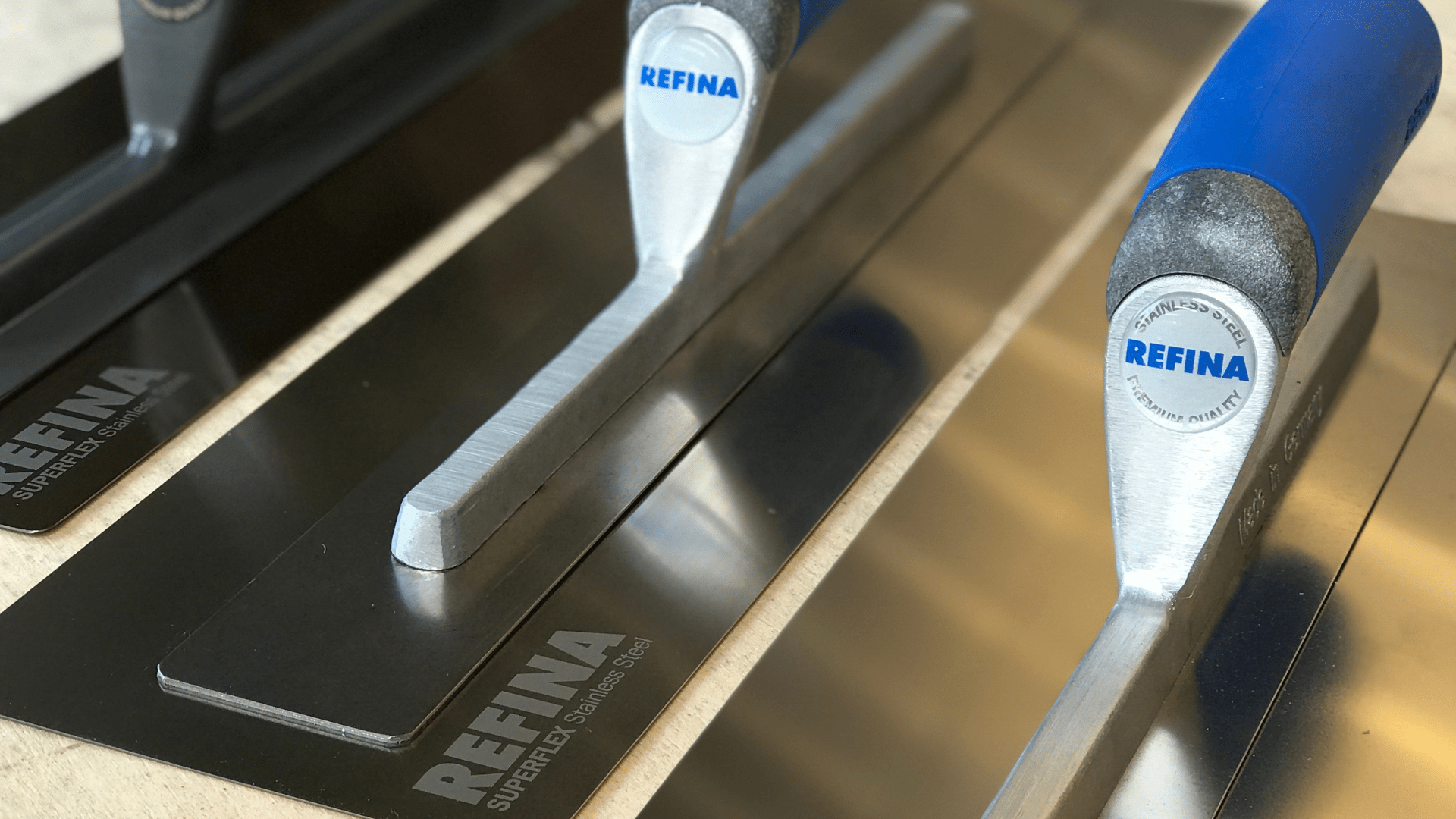
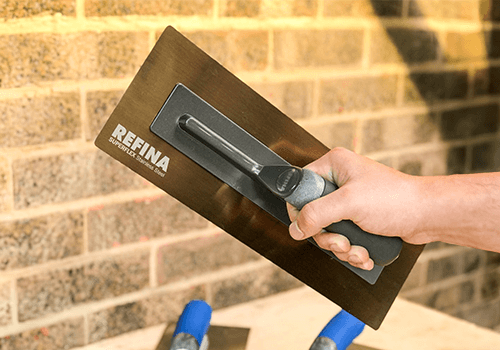
Modern manufacturing, particularly with high-quality brands like REFINA, has eliminated the need to break in a trowel. Our premium trowels are machine-finished and polished to be usable from day one, with rounded edges and ergonomic design to minimise handling issues.

What really sets REFINA apart is the use of specially formulated metal alloys during manufacturing. These advanced alloys aren’t found in most mass-produced trowels. They’re engineered to wear more evenly over time, adapting subtly to your unique technique and plastering style.

This results in a trowel that becomes more comfortable to use and offers exceptional durability, outperforming many like-for-like alternatives in terms of lifespan and consistency.

However, many professionals still prefer to break in their tools manually. It’s often seen as a rite of passage, a way to personalise a tool, and an opportunity to shape it to your preferences before it ever touches a wall.

So, should you break in a new trowel? If you’re working on high-stakes finishes and want full confidence in your tool, then yes, it could be worth the time. For roughing in or general-use trowels, you may not notice a major difference.

How To Break In A Plastering Trowel

If you’ve decided to go ahead and break in your trowel, here’s a simple guide on how to do it. The aim is to smooth down the sharper elements without damaging the integrity of the blade.

Tools & Materials You’ll Need:

  • Fine-grade abrasive paper (e.g., 400–800 grit wet/dry sandpaper)
  • Sanding block or flat file
  • Soft cloth
  • Metal polish (optional)
  • Protective gloves

Step 1: Check the Edges and Corners

Run your fingers gently along the edges and corners of the trowel. If you feel sharp points or jagged areas, these are prime spots to round off slightly.

Step 2: Sand the Edges

Using your sandpaper wrapped around a sanding block, gently work along the long edges of the trowel in smooth, even motions. Focus particularly on the corners; you’re not trying to make them blunt, just slightly softened to avoid dragging through the plaster.

Tip: Keep the sanding consistent and light. Too much pressure or uneven filing could distort the shape.

Step 3: Polish the Face (Optional)

Some plasterers like to polish the surface of the blade using metal polish or a fine abrasive pad. This can reduce surface drag when laying on or finishing, especially when the trowel is new.

Step 4: Wipe Clean

Use a soft cloth to wipe down the trowel thoroughly, removing any dust, grit, or residue. You want to avoid any debris from transferring onto your plaster during your first use.

Step 5: Use on a Less Critical Job

Before using the trowel on a high-visibility surface, try it out on a backing coat or internal surface where imperfections aren’t an issue. This allows you to test the feel and make any final adjustments.

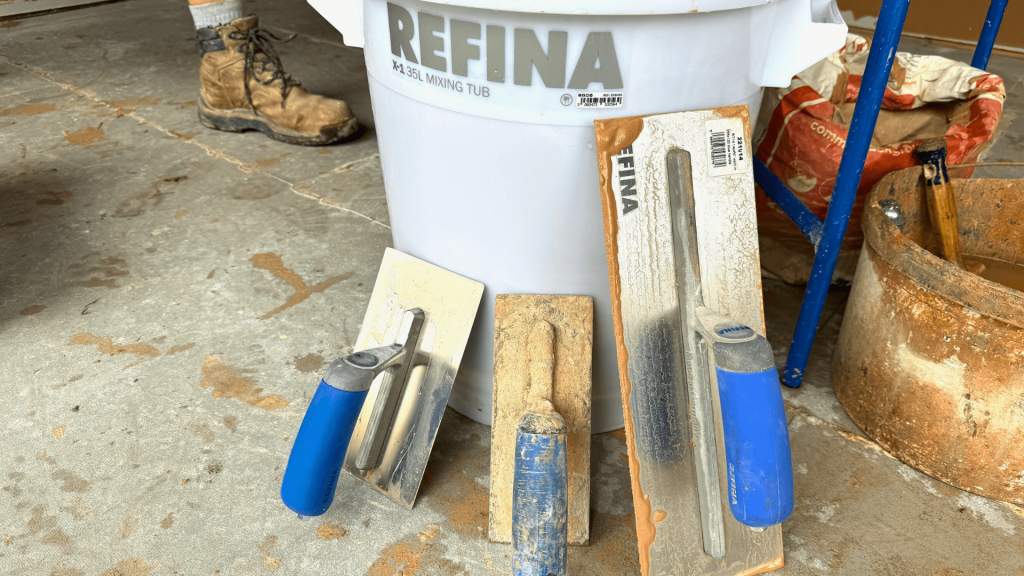
In fact, some plasterers prefer to use a new trowel exclusively for rendering work for the first 3 to 6 months. This approach allows the blade to wear in naturally while still being productive on site. Once the trowel has seen consistent use, it’s then promoted to the finishing trowel tool kit. This method keeps the trowel in excellent working condition while gradually enhancing its performance for fine finish work.

Should I Break In a REFINA Trowel?

At REFINA, our trowels are made with professional use in mind from the outset. Whether you’re using a PLAZIFLEX, a SUPERFLEX, or one of the other premium stainless steel finishing trowels, we ensure they’re precision-engineered to deliver high-quality performance from the first job.

That said, every tradesperson is different. Some prefer that “used” feel and want to mould the trowel into their working style. If that sounds like you, a light breaking-in routine won’t hurt your REFINA trowel; in fact, it may give you that little extra edge of comfort and confidence.

Key Takeaways

  • Breaking in a trowel means softening edges and smoothing the blade to improve comfort and finish quality.
  • The process can help avoid edge marks, enhance control, and customise the tool to your plastering style.
  • While not strictly essential, breaking in a trowel is still a popular step for many professionals, particularly when precision finishes matter.
  • REFINA trowels are designed for high-quality results from day one, but a light break-in can still help align your tool with your preferences.

Final Word: Smooth From Day One, Better Over Time

Breaking in your plastering trowel comes down to personal preference. If you like to tune your tools to suit your hand and technique, it’s worth the small investment of time. If you prefer to get stuck in straight away, a REFINA trowel is ready to deliver.

Whether you choose to break in or not, what matters most is using the right tool for the job. And with REFINA, you know you’re starting with the best.

Need help choosing your next trowel?
Explore REFINA’s full range of trowels and find the perfect match for your next project.

Leave a Comment